About 5 minutes
Hi, I’m Hiroshi.
“I’ve heard of it, but I’ve never actually been.”
You know that feeling, right?
If you live in Kanagawa, you’ve almost certainly heard of the Sagami no Odako Matsuri — the Sagami Giant Kite Festival.
That was exactly my situation. I knew the name. But it always lived on the “maybe someday” list, getting pushed further back every year.
Then the other day, I walked out to the Sagami River with our Shiba Inu Momiji — and there it was. A giant kite being built right in front of me.
Just the frame was enough to make me regret ever underestimating it.
Who This Post Is For
- Anyone who’s heard of the Sagami Odako Festival but never been
- Looking for somewhere to go in Kanagawa during Golden Week
- Curious whether you can get there by motorcycle
- People who’ve ever stumbled onto something unexpected during a walk
Bottom Line
Seeing just the frame made me decide: I have to watch this for real. No more putting it off.
We Went for a Walk After Momiji’s Rabies Shot
That day, Momiji had her annual rabies vaccination.
After the shot, I wanted to take her somewhere she’d enjoy. Momiji loves the water, so I was torn between the river and the beach — until my wife settled the debate and we headed to the river.
We drove out to the Sagami River.
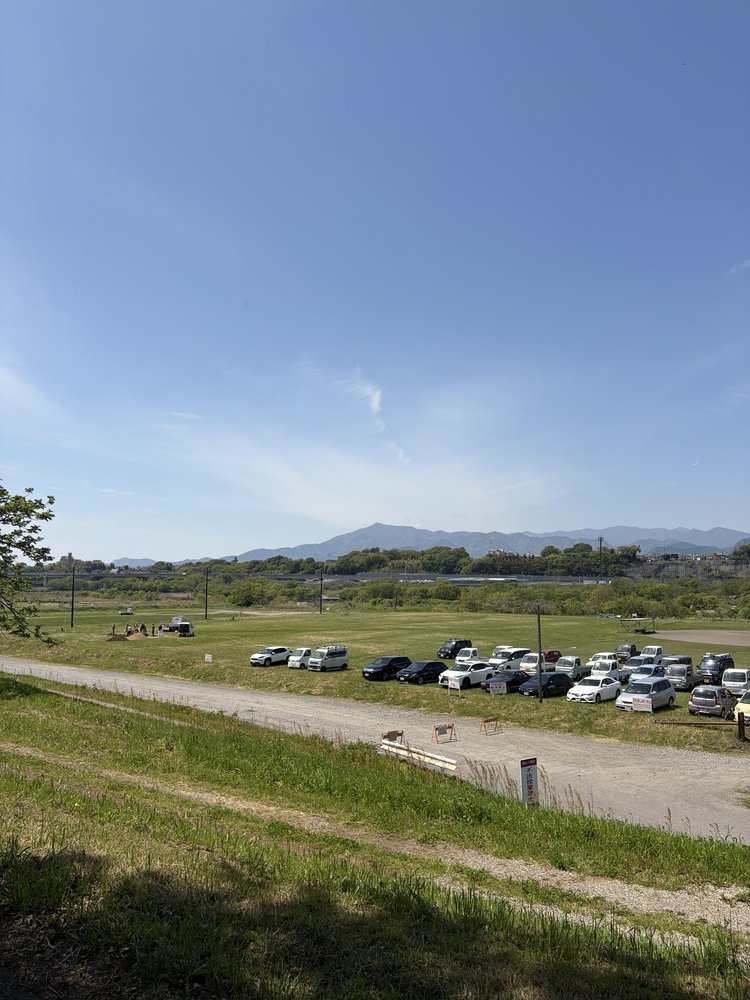
The sky was wide open and blue. Mount Oyama stood out sharp in the distance. A sunny day at the Sagami River is something else.
→ Related: Momiji Knew. Taking My Shiba Inu for Her Annual Rabies Vaccination
When We Got to the River, Something Was Being Built
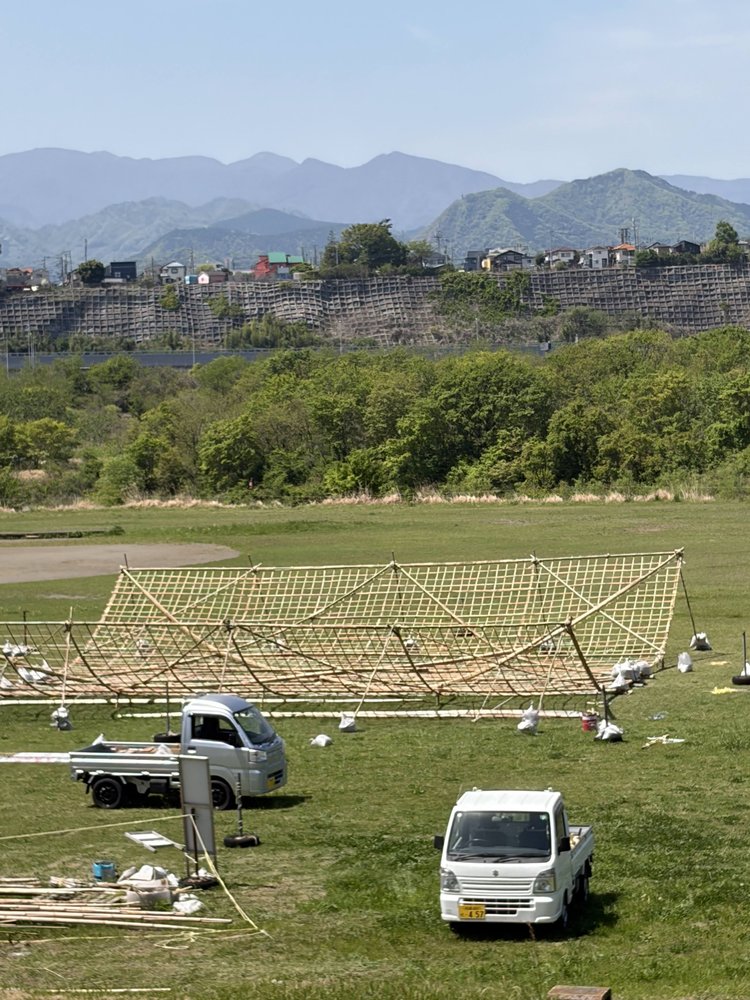
When I climbed up to the levee and looked out over the riverbed, something was being built.
Large bamboo-framed structures were lying on the ground, some partially upright. “What is that?” My first thought: construction work. But it did not feel like that either.
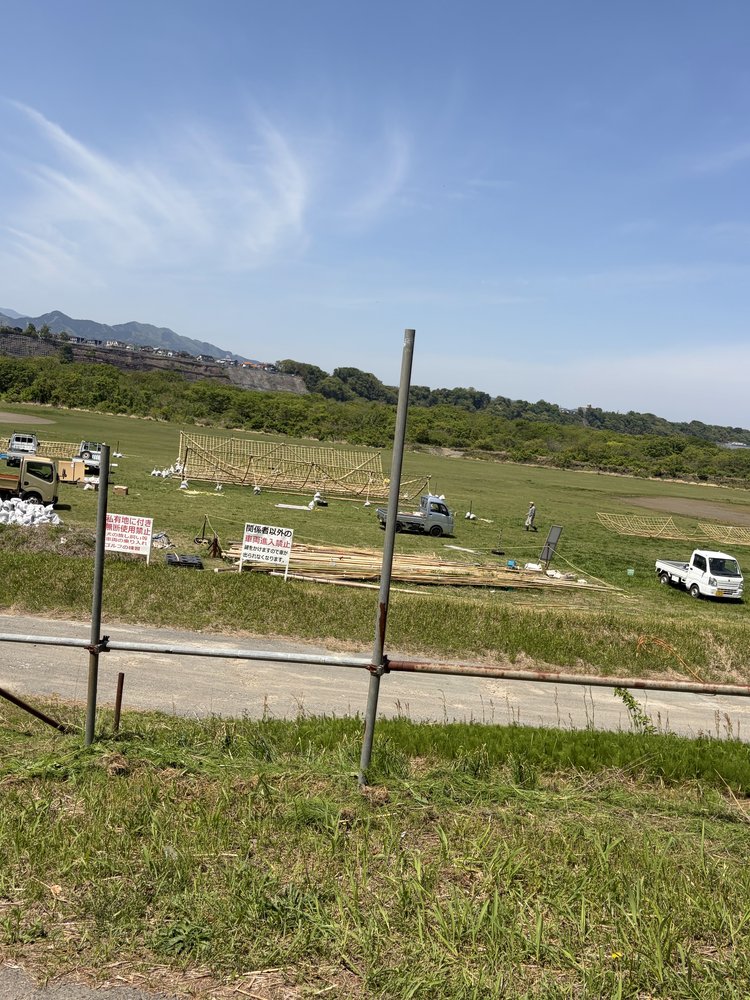
From the car, I could see about three of these structures being made in different spots across the wide riverbed.
Up Close, It Was Bigger Than I Expected
When I got closer, just the frame blew me away. Bamboo poles woven into a grid, spreading wide across the ground. Each side was enormous. This is a kite? This thing goes up in the air?
Honestly, I had underestimated it. I knew about the Sagami Odako Festival, but I had basically thought “eh, it’s just a big kite.”
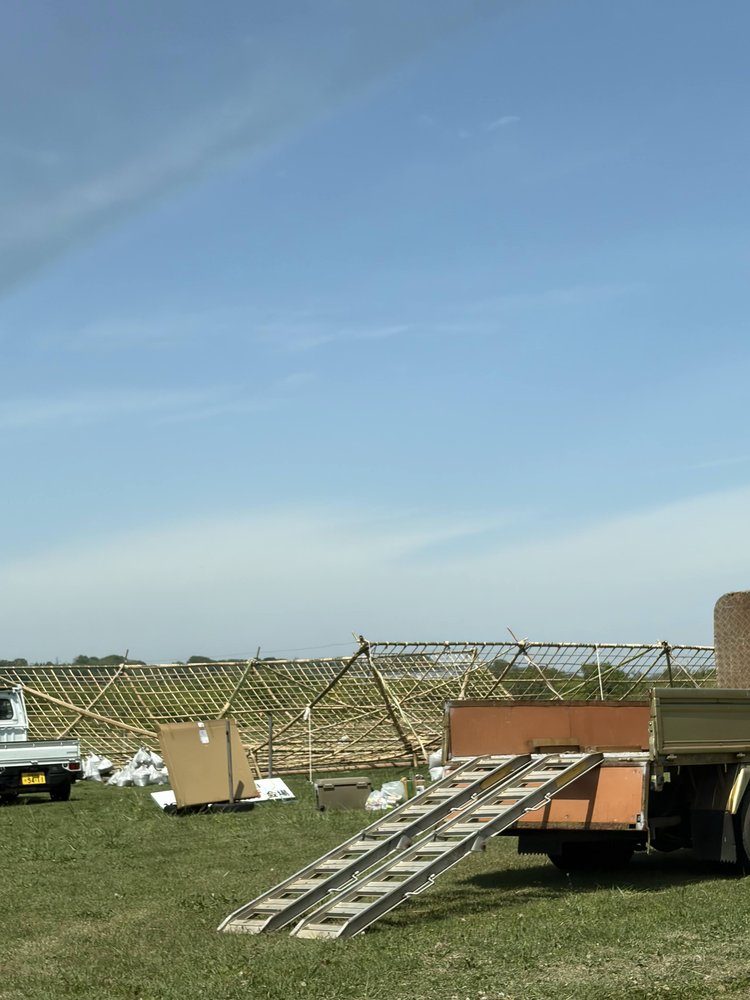
When I looked it up later, the “Hachiken-dako” flown at the Shindo venue is 14.5 meters on each side — the size of 128 tatami mats. It weighs around 950 kg.
The tether rope is 3-4 cm thick and 200 meters long. It takes 80-100 people to fly it.
Yeah. Getting floored by just the frame makes complete sense. I was definitely underestimating this.
By the way — the “Japan’s largest” title refers specifically to the largest kite flown regularly every year. Not a one-time stunt. This scale has been sustained, year after year. That’s what makes it genuinely impressive.
A Banner Told Me This Was That Festival
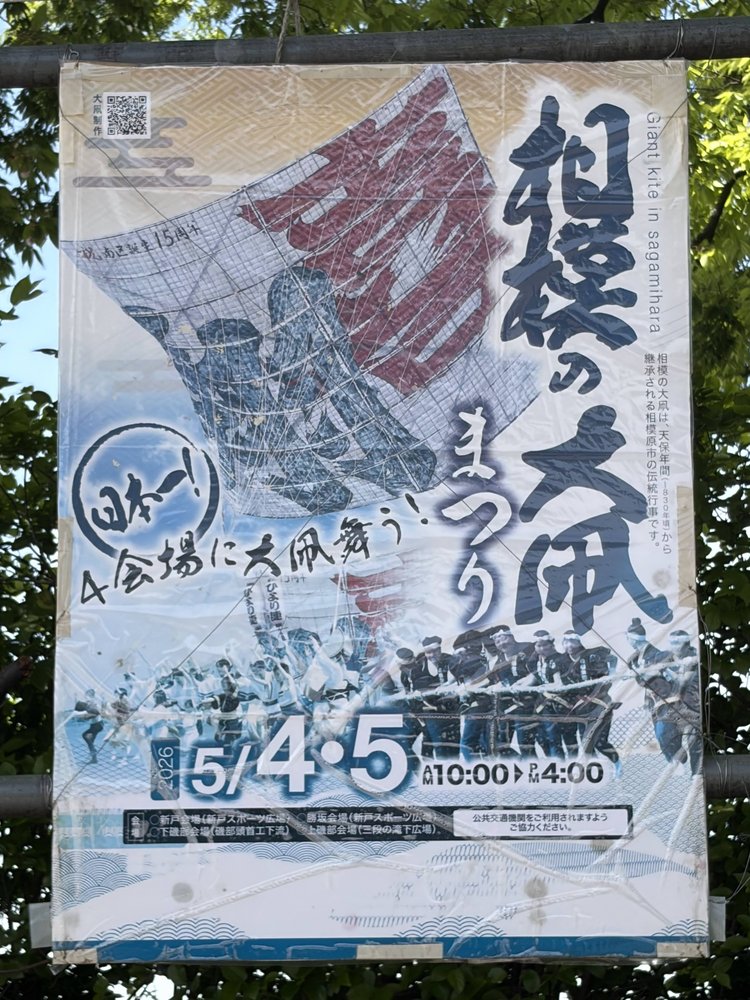
Near the levee, there was a banner.
“Japan’s Largest — Sagami no Odako Matsuri — May 4 & 5“
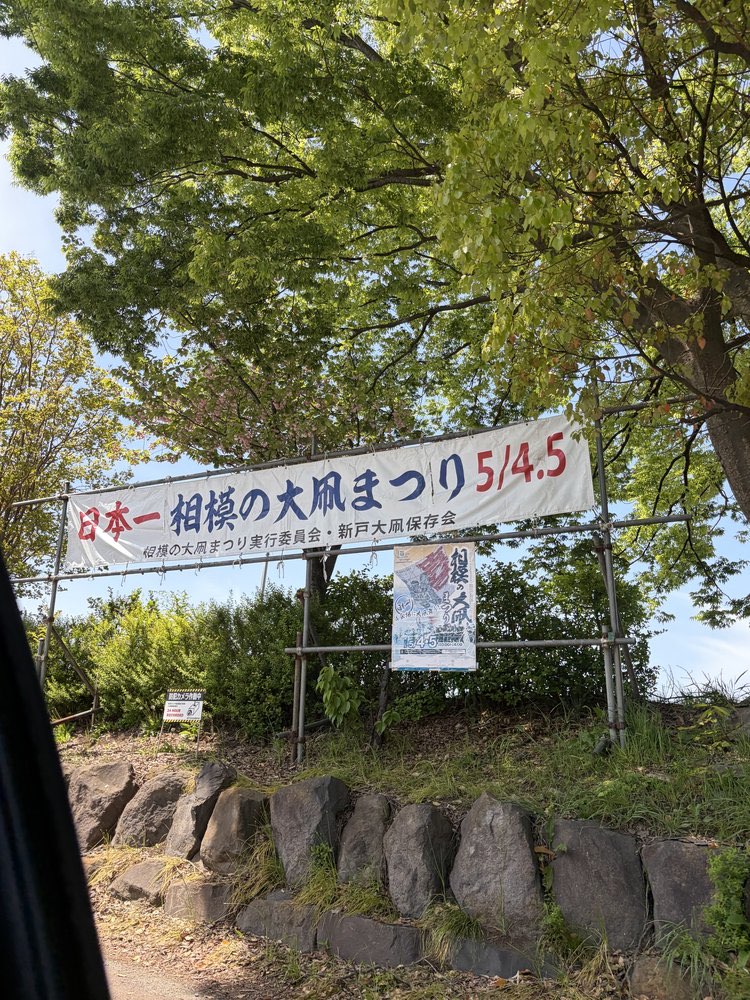
Oh. That festival.
I knew it was held every Golden Week. But it had always been “maybe someday” — pushed off again and again.
Standing there looking at the frame changed everything. That lukewarm “maybe I’ll go” instantly became “I’m absolutely going this year.”
A Festival That’s Been Going for Nearly 200 Years
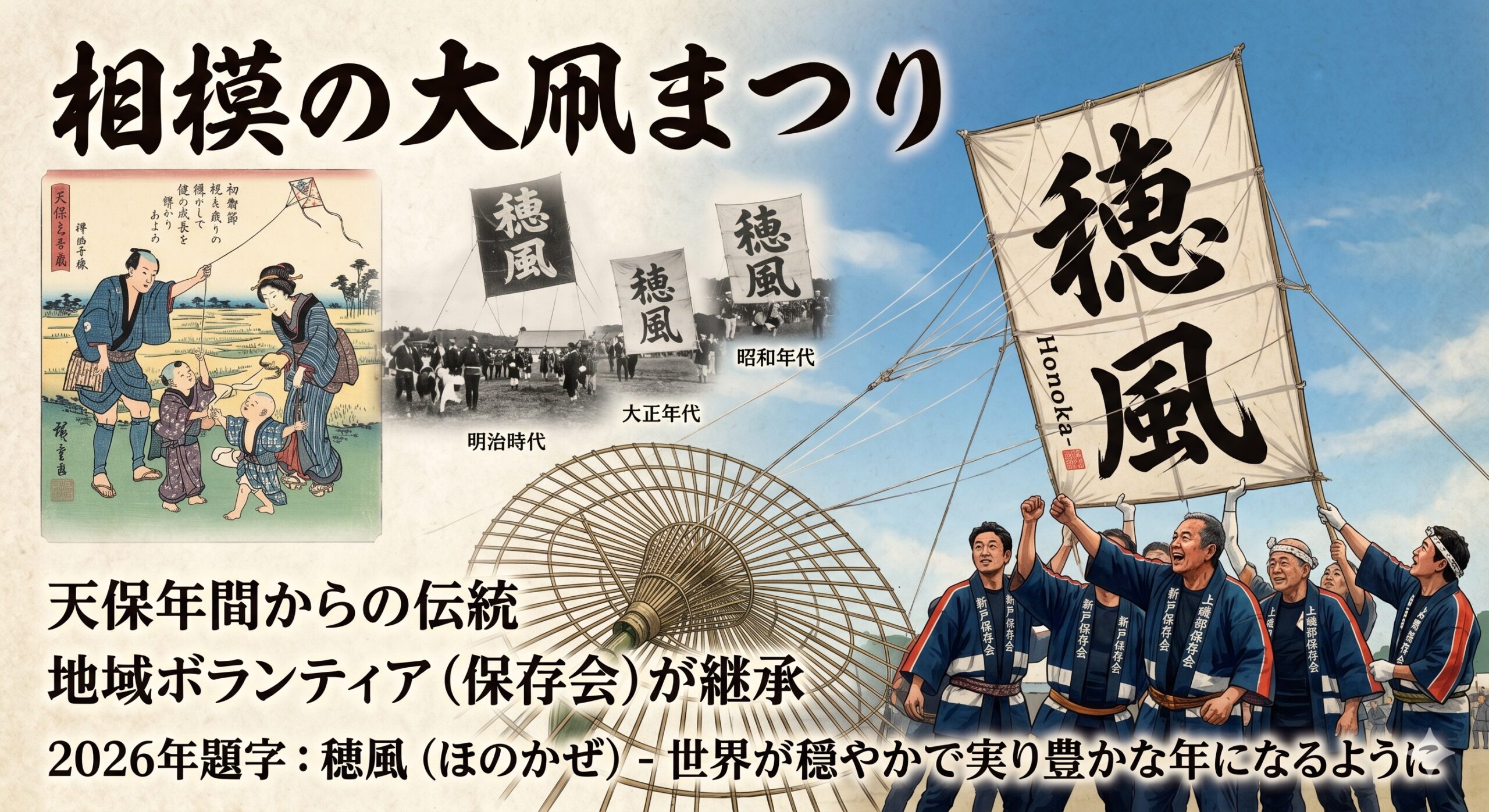
Once that banner caught my eye, I had to look it up — and the history ran deeper than I imagined.
The Sagami no Odako Matsuri traces its origins to the late Edo period, the Tenpo era (1830-1844).
It started as a tradition to celebrate the birth of a son — the first Boys’ Day celebration. In farming communities of the time, the birth of an heir was a major event. Families would fly kites high into the sky to report the birth to the heavens — something close to a Shinto ritual.
Over time, from the mid-Meiji era onward, it became a community-wide festival. The kites grew bigger decade by decade. By the Showa era, it was one of the “Top 4 Tourism Events” in Sagamihara. In 2010, it was officially designated as an Intangible Folk Cultural Property of Sagamihara City.
One detail I love: every year, the festival has a pair of theme characters (daiji) painted on the giant kite — two kanji that reflect the spirit and hopes of that year.
| Year | Characters | Meaning |
|---|---|---|
| 2023 | Shofu | Recovery from COVID, overcoming hardship |
| 2024 | Kifu | Celebrating Sagamihara’s 70th anniversary |
| 2025 | Kisho | Joy for Shohei Ohtani’s global success |
| 2026 | Honokaze | Wishing for a peaceful and bountiful world |
Nearly 200 years, kept alive by the people of this community. No wonder just the frame leaves you speechless.
And this festival is not run by the city or a corporation. It’s driven by local volunteer preservation groups (Hozonkai) from four neighborhoods: Shindo, Kamiisobu, Shimoiisobu, and Katsusaka. Each group handles everything — building the kite, flying it on the day. It runs on passion, not a budget. That’s the heart of this festival.
A Practical Guide: 2026 Event Details
Here’s the info you need if you’re thinking about going.
Schedule
| Date | What’s Happening |
|---|---|
| May 3 (Sun / Holiday) | Opening ceremony only — no kite flying |
| May 4 (Mon / Holiday) | Giant kite flying: 10:00-16:00 |
| May 5 (Tue / Holiday) | Giant kite flying: 10:00-16:00 |
4 Venues (All Running Simultaneously)
- Shindo Venue: The main venue where Japan’s largest eight-ken kite flies
- Kamiisobu, Shimoiisobu, Katsusaka Venues
2026 Theme: Honokaze — A wish for a peaceful and bountiful world.
Getting There (Public Transit Is the Smart Move)
- JR Sagami Line, Sobudaishimo Station → 15-20 min walk (Shindo Venue)
- JR Sagami Line, Shimomizo Station → 5 min walk (Kamiisobu Venue)
- Odakyu Line, Sobudai-mae Station → Shuttle bus available
Can You Get There by Motorcycle?
Technically yes, but I would not really recommend it. Temporary parking areas are unpaved and fill up fast. There are no designated motorcycle spots, and the ground can get muddy.
Honestly, I was thinking about riding my Super Cub to avoid the car traffic — but then I pictured getting my beloved Cub stuck in the mud. I’ll take the train.
Crowd Size
All four venues combined draw 160,000-180,000 visitors every year. The all-time record was 180,000 in 2010. Even at the 2023 comeback after a four-year COVID break, 178,000 people showed up. One of the biggest Golden Week events in Kanagawa.
180,000 people. I was already shaken by just the frame — and I’ve been quietly postponing this festival year after year with my “maybe someday” attitude. Honestly, a bit embarrassing.
Peak Crowd Times
Expect the biggest crowds around 2:00 PM on both days. For a more relaxed experience, aim for the morning.
“Waiting for the Wind” Is Part of the Experience
Flying a giant kite requires a steady wind of 10-15 m/s. When it’s calm, everything goes into “wind waiting” mode — the kite stays on the ground. Visitors can get up close to the kite and even chat with the builders. The festival is not just the moment the kite flies.
Rain Means Cancellation
The washi paper surface is extremely sensitive to moisture. Rain makes it heavy and risks the whole structure collapsing — so the event is cancelled in rain. The call is made the morning of the event, announced via the official website and Sagamihara City Call Center (042-770-7777).
→ Related: Fireflies in Yokohama? Kodomo Shizen Park with My Dog
Mount Oyama Was Beautiful from Up There
After taking in the kite construction site, I climbed back up to the levee. Mount Oyama was right there, sharp against the blue.
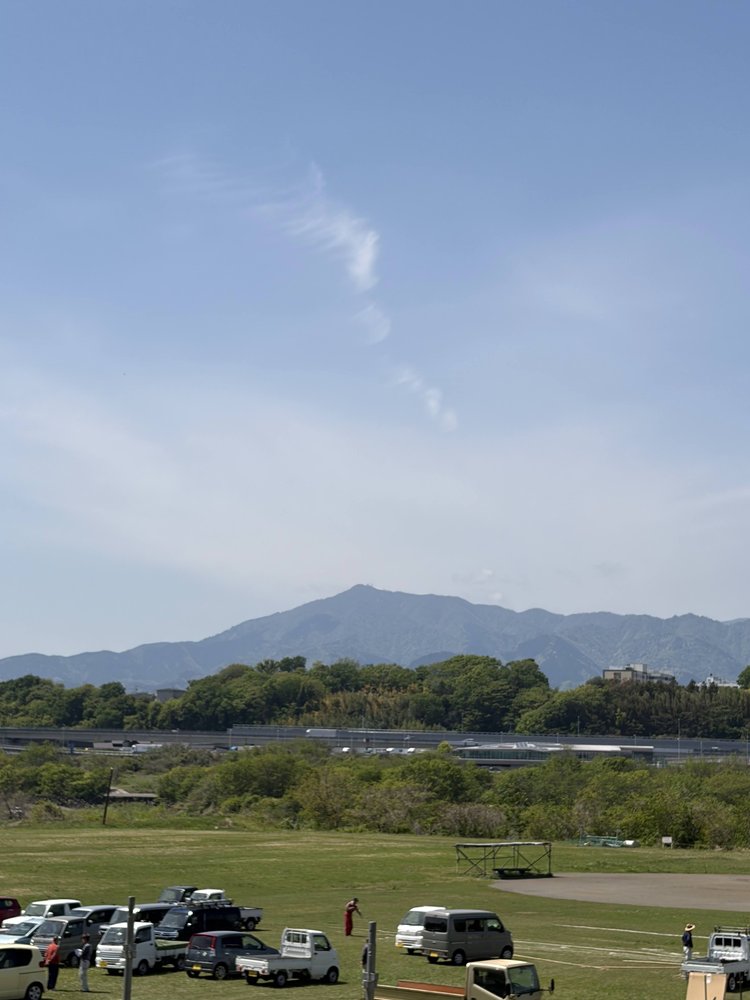
Blue sky. Mount Oyama. The green of the Sagami River. If I can watch the kite fly with a view like this, the trip is already worth it.
→ Related: A Quiet Coastal Walk in Ninomiya with My Dog
Final Thoughts
An event I’d been filing under “maybe someday” became “I’m absolutely going this year” after one look at the frame.
What will it look like when this giant kite actually rises into the sky?
If I’m being honest, there’s a small voice in the back of my head whispering “what if you forget again?” — because that’s exactly how this has gone every single year.
But honestly, writing this right now, I caught myself thinking: knowing me, will I be writing the same article again next year?
I want to see it. At least once in my life — a kite this big, climbing up into open sky.
May 4th and 5th. I’ll be looking up at the sky above the Sagami River.