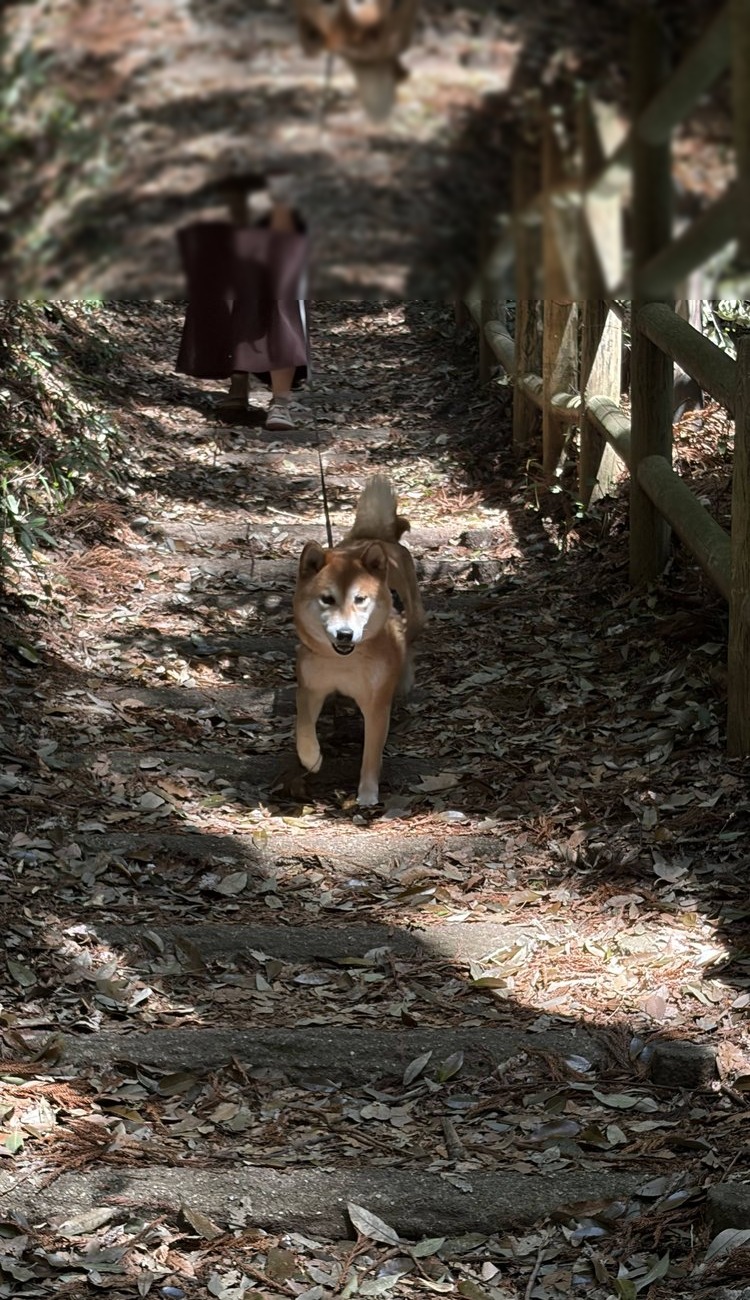
Hi, I’m Hiroshi.
Lately, I’ve been dealing with some friction at work — not the job itself, but the people part. You know how it is.
So I took my Shiba Inu, Momiji, to Izumi no Mori in Yamato City, Kanagawa. We walked for a few hours. And honestly? I came home feeling a lot lighter.
Who this post is for
- Looking for a relaxed hiking walk in Kanagawa
- Traveling with your dog and need a free, pet-friendly spot
- Feeling drained by work or people and need a reset
- Interested in Japan’s old rural lifestyle and folk history
What I took away from this walk
People in Edo-era Japan probably struggled too. But standing in front of a thatched-roof farmhouse, watching a wooden water wheel turn — something in me loosened. That’s the kind of place Izumi no Mori is.
What Is Izumi no Mori? A Quick Overview
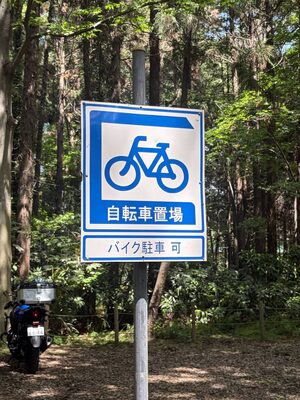
Izumi no Mori is a free nature park in Yamato City, Kanagawa Prefecture, built on a valley where groundwater from the Sagami River system springs to the surface.
No admission fee. Three free parking lots with 122 total spaces. Open around the clock.
By train: a 15-minute walk from Sagami-Otsuka Station, or 25 minutes from Tsuruma Station. The community bus “Yamaton Go” also stops nearby for $1.
| Location | Kamikusakayanagi, Yamato City, Kanagawa |
| Admission | Free, always open |
| Parking | Free · 3 lots · 122 spaces |
| By Train | Sagami-Otsuka Sta. 15 min / Tsuruma Sta. 25 min |
| Bus | Yamaton Go community bus · $1 |
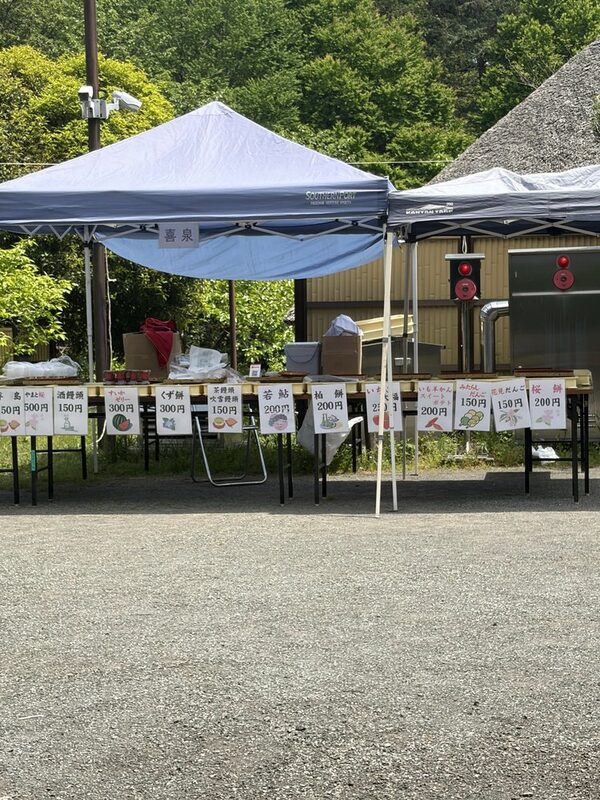
| Gift Shop | Weekends & holidays only · 11 AM–3 PM |
| Dogs | Welcome (leash required · please clean up) |
| Facilities | Nature center “Shirakashi no Ie” (closed Mon · free), Folklore Museum (closed Mon · free) |
Jalan users give it 4.0 stars. The “quintessential” tag fits perfectly.
The Spring-Fed Pond and Its Reed Beds
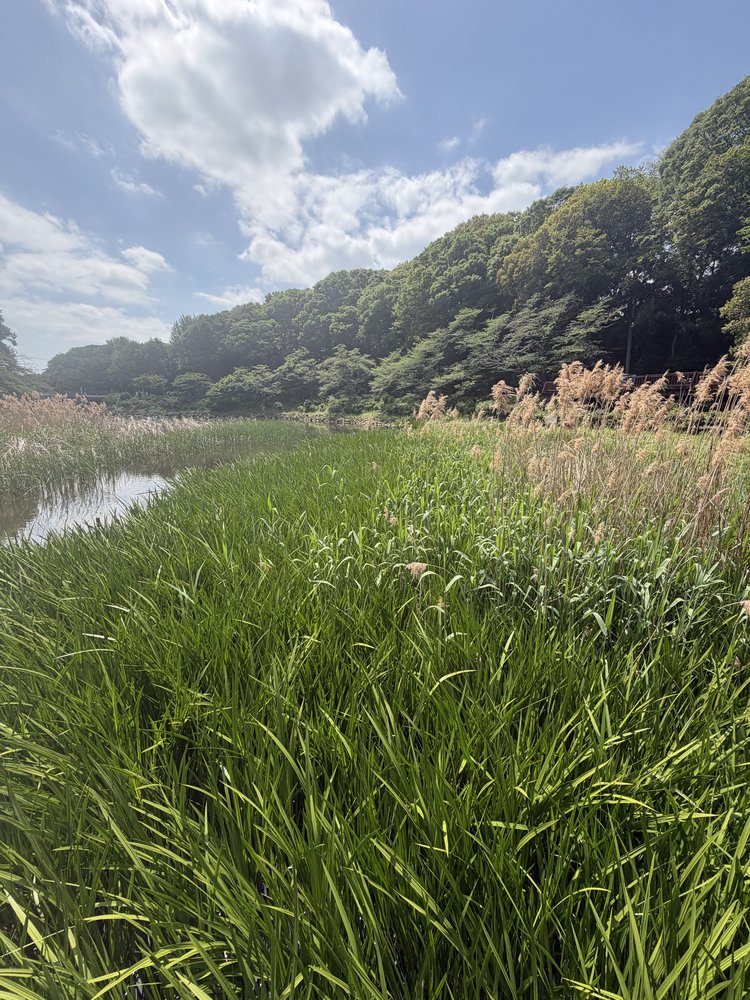
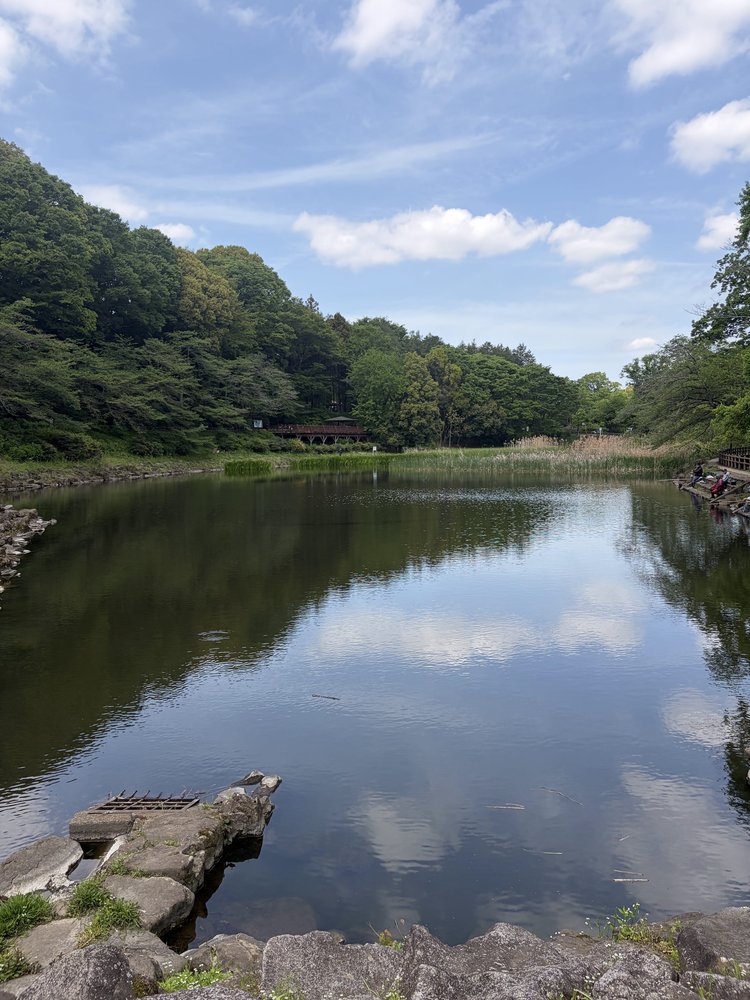
The first thing that struck me was the reeds. Tall, green, and dense along the waterline — the kind you don’t expect in a city park.
This valley exists because groundwater from the Sagami River basin rises naturally here. It’s not a man-made pond — the water comes from the earth itself. That changes how the whole place feels.
Birds nest in the reeds. Dragonflies hover over the surface. The nature center “Shirakashi no Ie” (free, closed Mondays) has exhibits on the local ecosystem if you want to learn more.
Momiji at the Water’s Edge
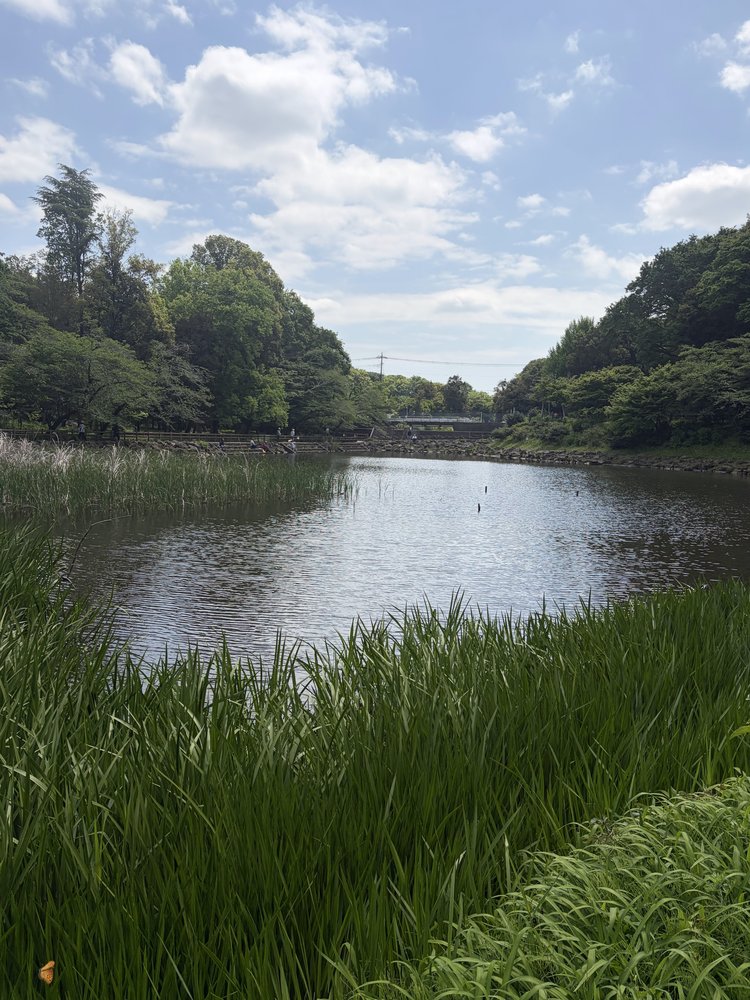
Momiji loves water. The moment a pond comes into view, her whole body changes — nose out, neck stretched, ears up.
“There she goes again,” I thought, as I slowed my pace to match hers along the water’s edge.
The pond was clear, edged with bright reeds. Momiji padded along the bank without a sound.
If you’re coming with a dog who loves water, I’ll warn you: this park has a lot of it. Pack a towel. — Speaking of dogs and water, my Ninomiya coastal walk shows a very different side of Kanagawa’s shoreline, worth reading if you’re planning a beach-adjacent day out.
She Waded Right In
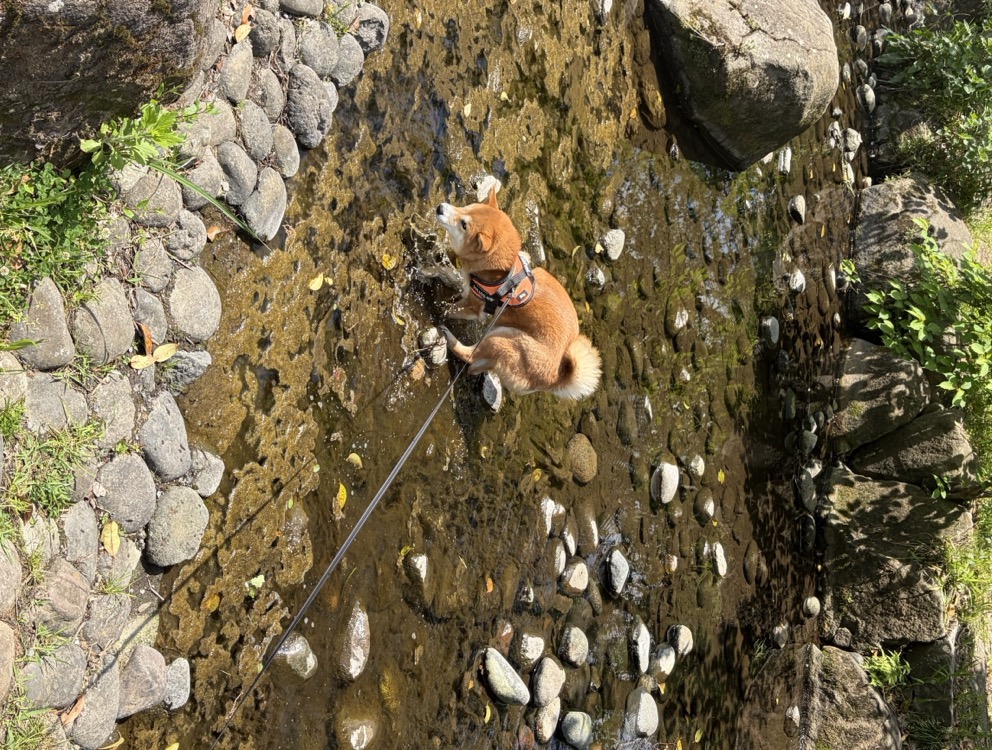
Near the wooden bridge, there’s a shallow rocky stream where the groundwater flows through. Momiji spotted it and made her decision before I had time to react.
In she went. Paws in the water, nose low, tail curled high.
I stood on the bank and watched. Honestly, I envied her a little. No hesitation. No second-guessing. Just: water looks good, I’m going in.
The Water Source — and a Slowly Turning Wheel
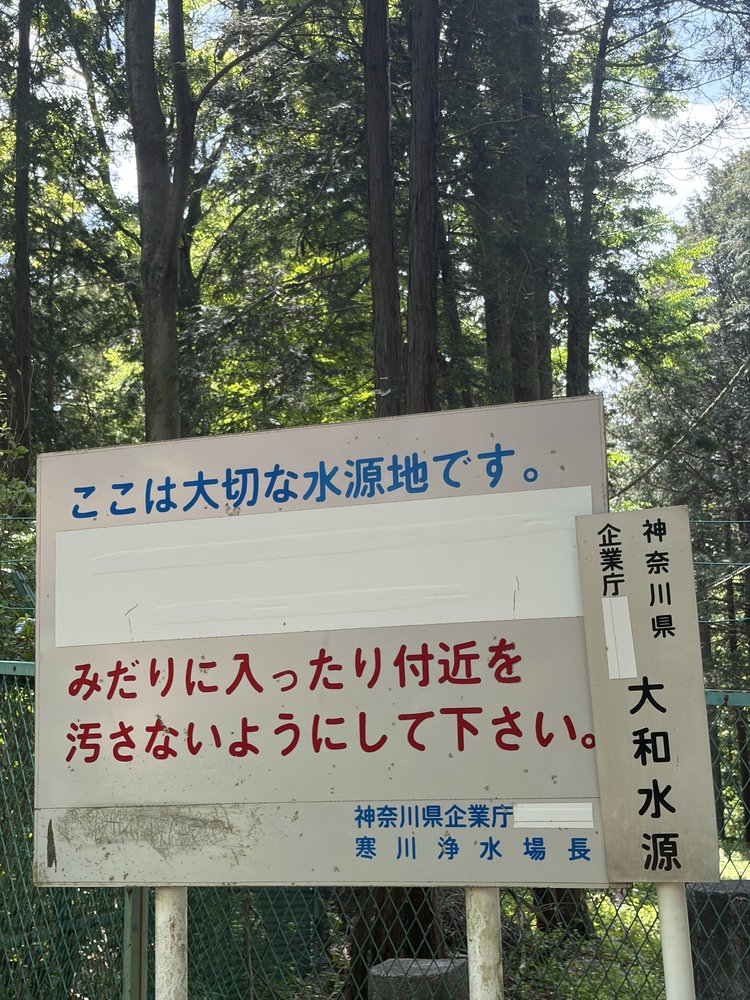
A sign read: “This is an important water source.” I stood in front of it for a moment.
Not far away — near the small stream by the wooden bridge — there was a wooden water wheel, slowly turning in the current.
I filmed 17 seconds of it. Just watching felt meditative.
Standing there, I thought about the people who once lived here — drawing water, tending rice paddies, building a life without machines.
Japan today is loud with terms like “harassment” and “workplace toxicity.” Things that maybe didn’t have names before, but still existed. I’ve heard that old Japan was once called “the land of smiles.” I wonder what that actually felt like.
The Fleabane Path — Walking Through My Thoughts
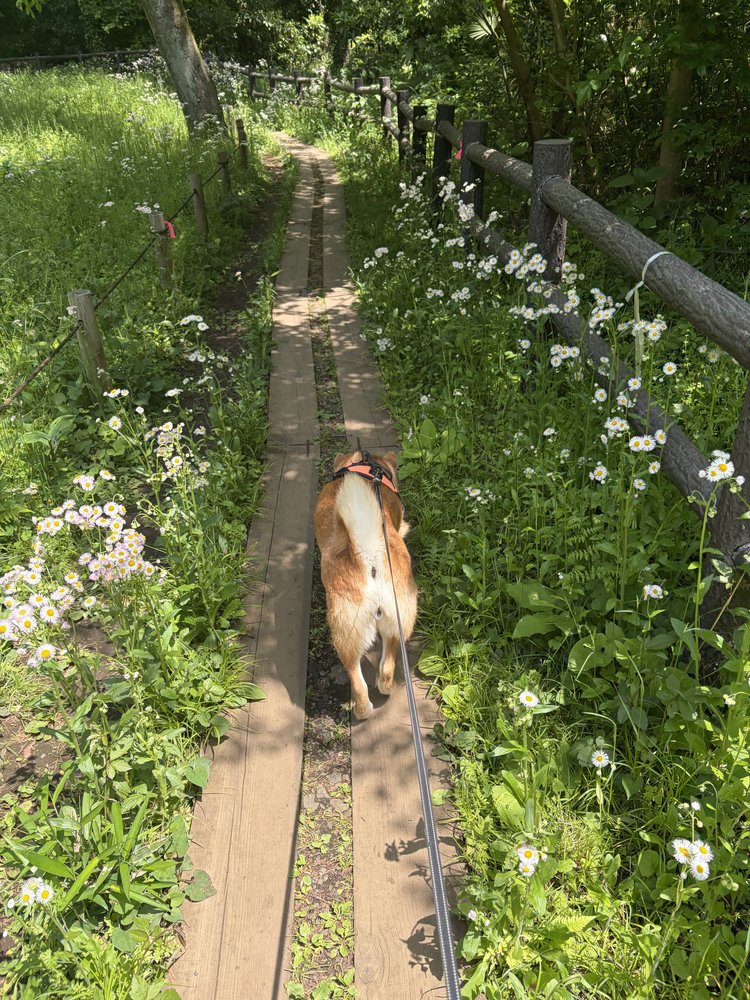
White wildflowers lined both sides of a narrow path. Fleabane, I think. Small, simple blooms — and Momiji was walking calmly right through the middle of them.
Something settled in me on that path.
“There have always been difficult people in the world. That’s not new. That’s just… people.”
I didn’t find an answer. But walking with Momiji, I didn’t need one.
Crossing the Suspension Bridge into the Forest
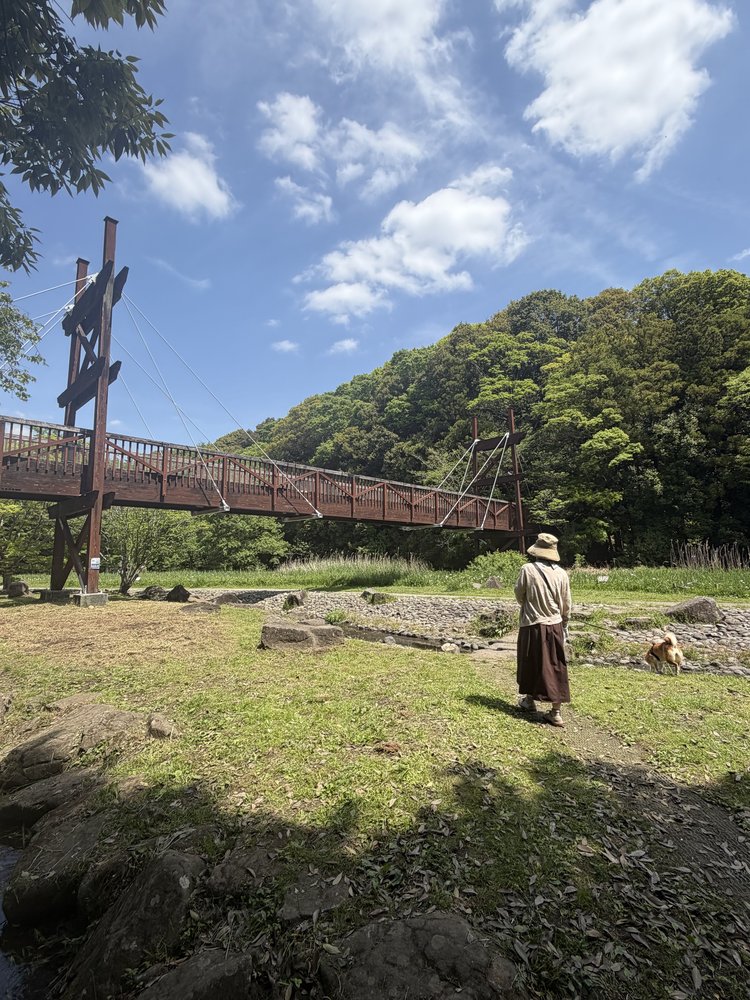
The park has a wooden suspension bridge that leads deeper into the forest.
It doesn’t swing much, but there’s something satisfying about the sound your feet make on old wood. Below, I could hear the stream — the same one Momiji had waded into earlier.
This isn’t a strenuous hike — it’s more of a nature stroll. No trekking poles needed. Comfortable sneakers are fine. If you prefer something with more elevation, Takamatsu-yama from Komachi Shrine in Atsugi is a proper forest climb worth knowing about.
Nearby, the nature center “Shirakashi no Ie” offers free exhibits on the local ecosystem (closed Mondays). There’s also a historical site marker for the Kamikusakayanagi archaeological site — evidence that people have lived here for a very long time.
The Folklore Museum — Meeting an Edo-Era Farmhouse
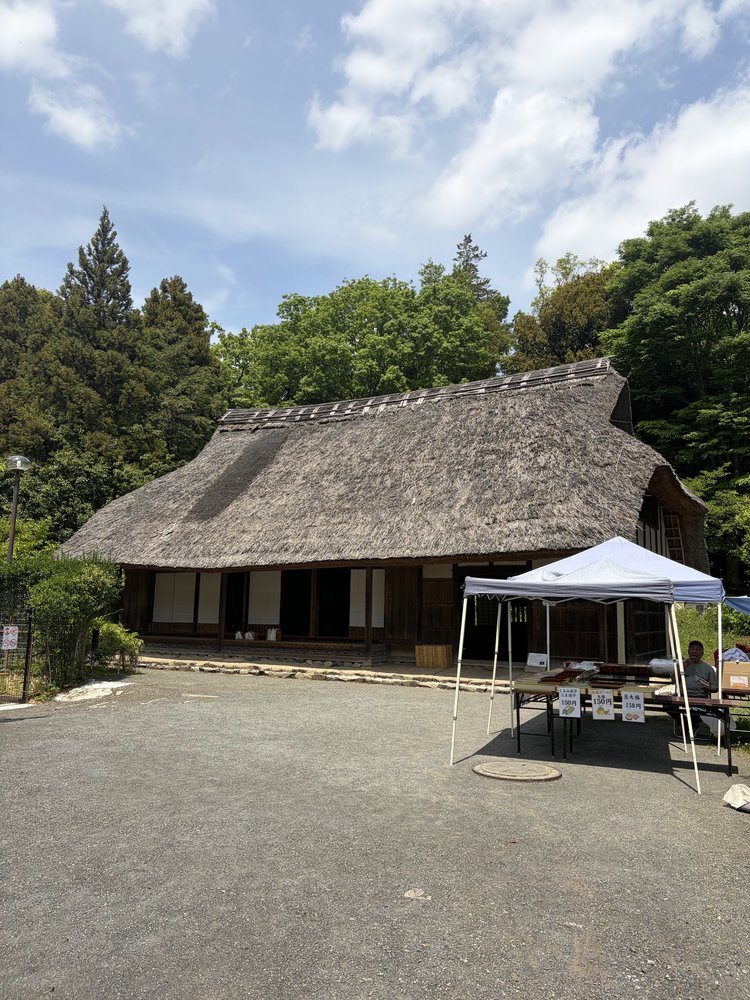
Honestly, this was my favorite part of the whole walk.
Two relocated and preserved Edo-era farmhouses stand inside the Folklore Museum (closed Mondays · free). Thatched roofs, dark timber — the kind of presence that makes you stop.
I hadn’t seen a proper thatched farmhouse in years. With Momiji sitting in front of it, the scene looked like something from a photograph of rural Japan in the Showa era.
Note: A traditional weaving workshop is scheduled for May 24, 2026, if you’re interested in hands-on folk crafts.
Inside the Farmhouse — A Different Kind of Time
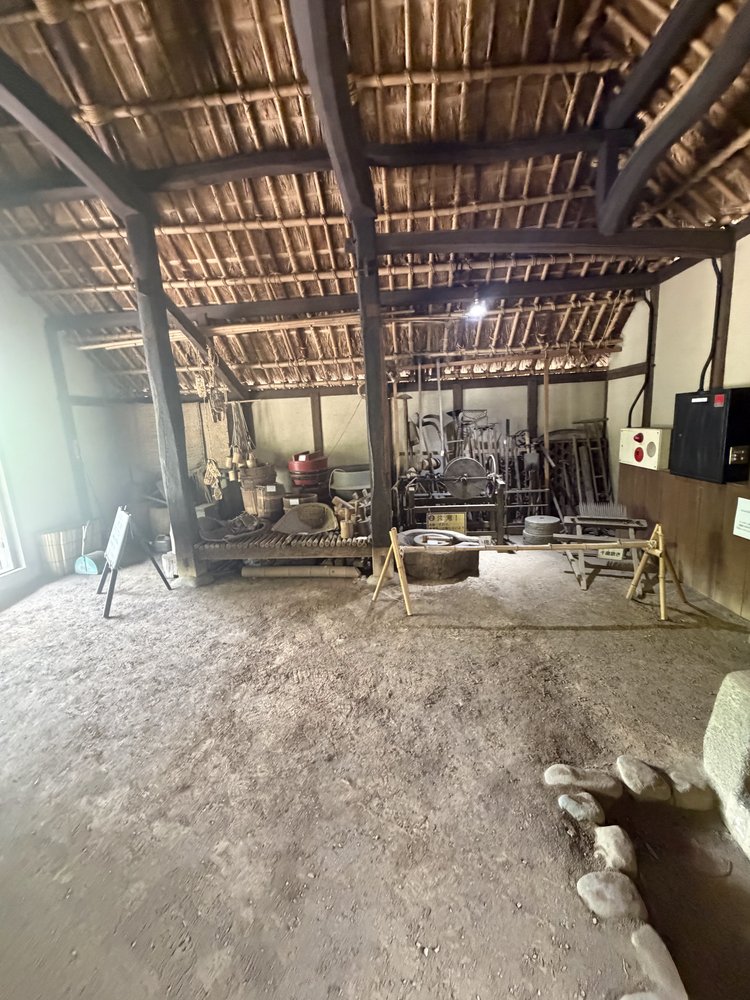
I stepped inside. The ceiling was dark with old timber and thatch. Agricultural tools were arranged along the walls — implements for pounding, grinding, separating grain.
It smelled like old wood and dust. The good kind.
Standing there, I thought: this was someone’s entire world. Wake up, work the land, come back here. Repeat. No weekends. No HR department. Just seasons and soil.
I’m not romanticizing it — it was hard. But there was a simplicity to it that felt almost restful to imagine.
The Hearth and the Threshing Tool — Glimpses of Old Daily Life
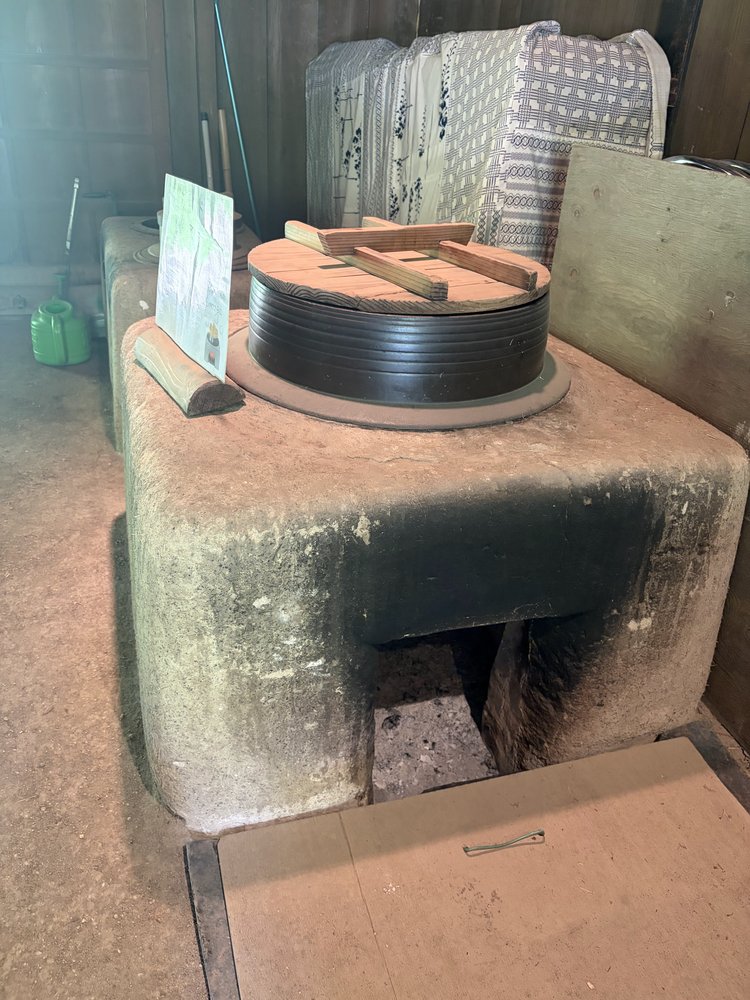
Inside the farmhouse, farming tools and household objects were on display.
There was a kamado — a traditional clay cooking hearth. “This is how they made rice every morning,” I thought. It made my head spin a little.
A tomi (a wooden threshing tool for separating grain) stood nearby. These were the technologies of daily survival.
Life without convenience. And yet people built communities, raised families, kept going. Maybe modern “stress” just has different packaging.
Getting There: Access & Practical Info
Here’s everything you need to visit Izumi no Mori:
📍 Open Izumi no Mori on Google Maps
- By train: Sagami-Otsuka Sta. on the Sagami Railway · 15-min walk · Tsuruma Sta. · 25-min walk
- By bus: Yamaton Go community bus · $1
- By car: Free · 3 lots · 122 spaces · Extended hours in summer
- Gift shop: Weekends & holidays · 11 AM–3 PM only
- Dogs: Welcome on a leash. Please clean up.
- Prohibited: Picking plants or wildlife · Open flames (except designated campsite)
While you’re exploring this part of Kanagawa, the Sagami Giant Kite Festival is something completely different — free, outdoor, and deeply local. Worth timing your trip around if you can.
Wrapping Up
The work frustrations didn’t disappear when I got home. They rarely do.
But after walking through Izumi no Mori — watching Momiji charge into a stream without a moment’s hesitation, standing by the slow-turning water wheel, stepping inside an Edo-era farmhouse — something had shifted.
If you’re in Kanagawa and need a reset, it’s free, dog-friendly, and worth half a day of your time.
Old Japan is still here. You just have to know where to walk.